Best overall / most established brand
Yamaha
Yamaha V3 Student Violin
Yamaha is a long-established, high-volume manufacturer with a documented, purpose-built student violin line (V Series, introduced 2013).
Read reviewAll four instruments compared here are assessed on documented specifications and market positioning, not hands-on playing tests. Sizing matters as much as the specific model for a first violin — confirm the right fractional size before choosing between these options.
Parents and beginner players choosing a first violin for school string programs or private lessons.
Every product above is assessed from manufacturer specification pages and named retailer listings, cross-checked across at least two sources where possible — not from hands-on play-testing. Each product's own Review Basis field and this guide's comparison both say so explicitly, per the site's interim trust policy on review badges.
Yamaha
Yamaha is a long-established, high-volume manufacturer with a documented, purpose-built student violin line (V Series, introduced 2013).
Read review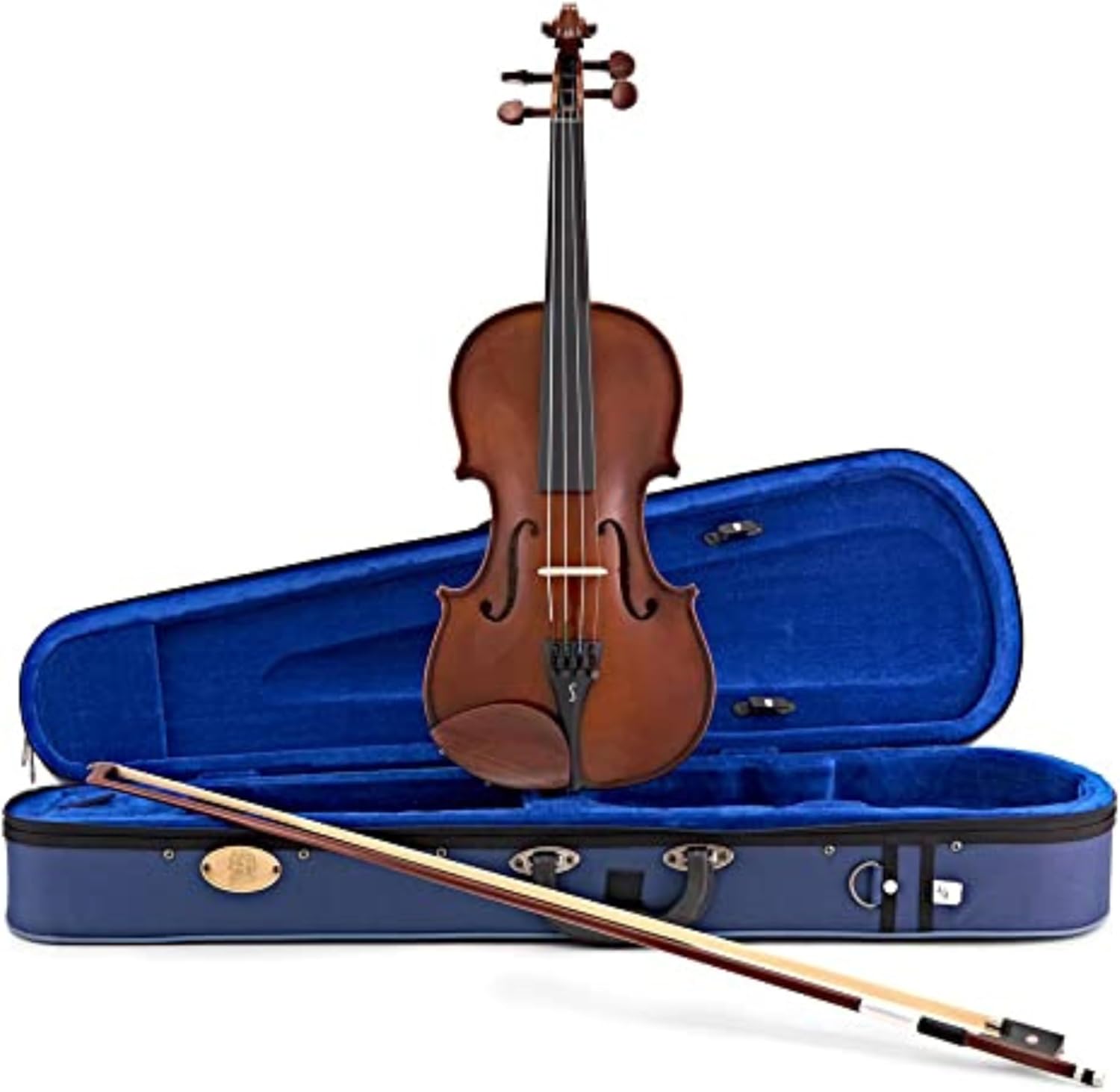
Stentor
Stentor, a UK string specialist tracing to 1895, offers the Student I across the full 4/4-to-1/16 range — useful for school programs or families expecting several size changes.
Read review
Mendini by Cecilio
Lowest typical price point among the four, bundled with spare strings, bridges, a clip-on tuner, shoulder rest, and an instruction book.
Read review
Eastman Strings
Aged solid spruce/maple tonewoods and genuine ebony fittings and hand-inlaid purfling, per the manufacturer's own description, rather than the laminated construction typical of the lowest price tier — while still being confirmed available across multiple sizes.
Read review
Cecilio
Cecilio and Mendini by Cecilio are sibling product lines from the same Southern California parent company — not unrelated competitors — and the CVN-100 bundles a hand-carved solid spruce top and maple back/sides with a fuller outfit (Brazilwood bow, hard case, rosin, and an extra set of strings) than some competitors' base listings, per the manufacturer's own product description.
Read review
Cremona
Cremona has been a well-known US student-violin brand for over three decades (the SV-175 is described by the brand as its top-selling student violin for over 30 years), with solid spruce top and solid maple back construction meeting NAfME-referenced student-instrument guidelines, per the manufacturer's own materials.
Read review| Model | Best for | Top | Back / Sides / Neck | Fingerboard | Pegs | Finish | Tailpiece | Sizes Available | Case | Bow | Back / Ribs | Back / Sides | Weight | Fittings | Purfling | Bridge | Varnish | Back/Sides | Strings | Included Accessories | Back |
|---|---|---|---|---|---|---|---|---|---|---|---|---|---|---|---|---|---|---|---|---|---|
| Yamaha V3 Student Violin | Best overall / most established brand | Spruce | Maple | Ebony | Ebony | Oil varnish | Wittner "Ultra" with 4 fine tuners | 1/2, 3/4, 4/4 | Included | Brazilian wood (included) | — | — | — | — | — | — | — | — | — | — | — |
| Stentor Student I | Best for the widest range of fractional sizes | Solid carved spruce | — | Rosewood | Rosewood | — | Alloy with 4 adjusters | 4/4, 3/4, 1/2, 1/4, 1/8, 1/10, 1/16 | Included | Wooden bow (included) | Maple | — | — | — | — | — | — | — | — | — | — |
| Mendini MV300 | Best value for a complete beginner kit | Hand-carved spruce | — | Ebony | Ebony | Satin antique metallic varnish | Alloy with 4 fine tuners | 4/4, 3/4 (confirmed in retail listings) | — | Brazilwood with Mongolian horsehair (included) | — | Maple | 0.45kg / 1lb | — | — | — | — | — | — | — | — |
| Eastman VL100 | Best solid-wood construction at this price point | Aged solid spruce | — | — | — | — | — | 1/8, 1/4, 1/2, 3/4, 7/8, 4/4 | — | K. Holtz Fiberglass BL10 (included) | Aged solid maple | — | — | Genuine ebony (pegs, fingerboard, chinrest) | Genuine hand-inlaid | Despiau | High-gloss, amber-brown | — | — | — | — |
| Cecilio CVN-100 | Best all-in-one outfit | Hand-carved solid spruce | — | Maple | Maple | — | Alloy, with 4 integrated fine tuners | 4/4, 3/4, 1/2, 1/4, 1/8, 1/10, 1/16, 1/32 | — | — | — | — | — | — | — | — | — | Hand-carved solid maple | D'Addario Prelude | Brazilwood bow (Mongolian horsehair), hard case, rosin, extra set of strings | — |
| Cremona SV-175 | Best proven track record | Solid spruce (hand-carved) | — | — | — | — | Composite, with 4 fine tuners | 4/4, 3/4, 1/2, 1/4, 1/8, 1/10, 1/16 | — | — | — | — | — | Ebony (pegs, fingerboard) | — | — | — | — | US-made Prelude | Travelite oblong case with built-in hygrometer; octagonal Brazilwood bow with ebony frog | Solid maple (hand-carved) |
Alternative: Stentor Student I, if you need a size outside Yamaha's V3 range.
Alternative: Yamaha V3, if brand-service familiarity matters more than size-range breadth.
Alternative: Stentor Student I, for a similar price tier with a longer-established brand history.
Alternative: Yamaha V3, if a lower price point matters more than solid-wood construction.
Alternative: Cremona SV-175, for a fully independent brand at a similar student tier.
Alternative: Eastman, already in this guide, for solid-wood construction at a higher step-up tier.
Extend the left arm straight out to the side, parallel to the floor, and measure from the base of the neck to the center of the palm — that measurement corresponds to a specific fractional size. A local music shop or teacher can confirm the fit in person.
Renting is especially common advice for violin specifically, more so than for many other instruments, because growing children usually need multiple size changes before reaching full size. Many rental programs let you exchange sizes as a child grows.
New strings stretch during their first several days of regular play. This is expected and settles down on its own — see the site’s How-To guide on violin tuning for the full troubleshooting steps.